
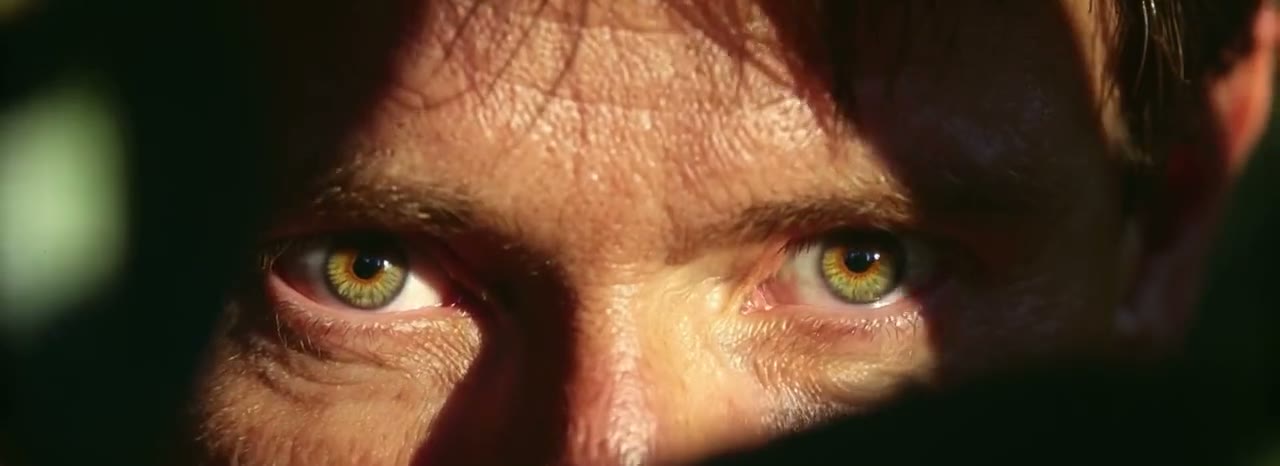
Open-weight audio-video foundation model

Official model guide and online generator

LTX 2.5 AI Video Generator

Explore native multishot storytelling, synchronized audio and video, automatic duration, Diffusion Fidelity Rendering, and professional 4K HDR output from Lightricks' new open-weight foundation model. Use the LTX 2.5 AI video generator directly below to create from a prompt, image, frame pair, or supported references.

LTX 2.5 AI Video Generator official multishot and HDR showcase
Official Lightricks launch footage, downloaded from the LTX 2.5 model page and re-encoded locally for responsive web playback.

Generate with LTX 2.5 online

The complete Musci3 video workspace is embedded here and starts with LTX 2.5 selected. You can still compare variants or switch models without losing the rest of the workflow.

Loading the Seedance 2.0 AI video generator…

Generation requires an account and uses credits based on the selected model, variant, duration, resolution, and other settings. Failed tasks are refunded automatically.

What is LTX 2.5 and when should you use it?

LTX 2.5 is Lightricks' 22-billion-parameter open-weight audio-video foundation model, released on August 11, 2026. It is designed as a production foundation rather than a single-purpose clip generator: teams can run it locally, fine-tune the pretrained checkpoint, use the hosted API, or build specialized workflows with LoRA and IC-LoRA adapters. The release changes both the creative surface and the rendering stack. Native multishot can move through connected wide, medium, and close-up views while holding character identity, environment, lighting, voice, and visual style across cuts. A custom Gemma 4 12B text encoder and dedicated prompt enhancer retain longer instructions, while the new diffusion video decoder and Diffusion Fidelity Rendering spend detail where a scene needs it instead of applying one fixed compression budget everywhere.

Asymmetric dual-stream diffusion transformer
22B

Asymmetric dual-stream diffusion transformer

Native high-resolution finishing output
4K HDR

Native high-resolution finishing output

Fast-tier maximum at 1080p
20s

Fast-tier maximum at 1080p

Distilled first-stage inference schedule
8 steps

Distilled first-stage inference schedule

Native multishot

An LTX 2.5 AI Video Generator built to hold a world across cuts

The defining improvement is not simply another output resolution. LTX 2.5 can generate connected scenes in one pass and preserve the visual and acoustic facts that make them feel like one sequence. The official examples below isolate cleaner motion and stronger instruction following before showing the multishot result: the camera changes its distance and composition, but the subject, environment, lighting, voice, and style remain part of the same world.

The continuity improvements

Cleaner motion
Stronger prompt adherence

Create a connected sequence that moves from an establishing view to a character shot and then a close detail. Preserve identity, environment, light direction, visual style, and voice across every cut; let each action finish before the next shot begins.

Production controls

Let the action choose its duration, then carry the result into finishing

Automatic duration follows the action instead of a preset

A compatible duration head reads the scene before generation and predicts how long the described action needs. In local pipelines you can omit the frame count or provide a minimum and maximum range. That makes a short reaction stay short while a move with setup, action, and recovery receives enough frames to resolve, reducing the pacing problems that appear when every idea is forced into five or ten seconds. Manual frame counts remain available when a production requires exact timing.

Native HDR and EXR preserve room for the grade

The HDR workflow accepts scene-linear EXR conditioning in sRGB/Rec.709, ACEScg, or ACEScct and can write half-float EXR frames alongside a 10-bit BT.2020/HLG HEVC master. Instead of baking a display look into an eight-bit intermediate, colorists and VFX teams retain highlight and shadow information for compositing, grading, and delivery. The hosted model also exposes 1080p, 1440p, and 4K output tiers for work that must survive beyond a social feed.

Diffusion Fidelity Rendering spends detail where the shot needs it

Traditional pipelines apply one compression and reconstruction budget across an entire scene. LTX 2.5 introduces a new diffusion video decoder and Diffusion Fidelity Rendering pipeline that can generate interior keyframes, add a full-resolution detail pass, and optionally run temporal refinement. The model allocates effort according to scene complexity, improving fast motion, faces, fine textures, and readable screen content without paying the maximum cost for every region of every frame.

LTX 2.3 compared with LTX 2.5

LTX 2.3 remains compatible with the same repository and many existing adapters, but LTX 2.5 changes the foundation used for new production work. Checkpoint components and LoRAs are not universally interchangeable, so existing workflows should validate their adapters before moving to the new release.

CapabilityLTX 2.3LTX 2.5
Scene structurePrimarily one continuous shotNative connected multishot sequences
Video reconstructionConvolutional VAE decoderNew diffusion video decoder
Text understandingGemma 3 text encoderCustom Gemma 4 12B plus prompt enhancer
DurationManual frame countManual frames or prompt-predicted auto duration
FinishingPrimarily SDR outputNative EXR, ACES-family conditioning, RAW, and 4K HDR
Open checkpointsDev, distilled, quantizedSplit dev/distilled components plus raw pretrained foundation
RenderingFixed multi-stage upscalingDiffusion Fidelity Rendering with detail and temporal refinement

Three production jobs that benefit from an open foundation

The official examples below cover the less visible part of generative video: preserving a high-dynamic-range master, improving the take rate before review, and adapting the model to a private domain. LTX 2.5 is available as a hosted service, but its strategic difference is that the same foundation can also move into an on-premises or fine-tuned workflow.

Cinema-grade finishing

Move generated footage into an EXR, ACES, DaVinci Wide Gamut, or HLG pipeline while preserving the dynamic range needed for professional color work.

High-detail advertising

Use the new decoder and fidelity renderer for products, faces, surfaces, and signage that have to survive review at full-screen resolution.

Private model customization

Fine-tune the pretrained foundation on a brand, character, physical domain, or proprietary dataset and run the result on-premises.

Start generating

How to create video with LTX 2.5

Move from a creative idea to a configured LTX 2.5 generation without leaving this model page.

1

Describe the shot

Write the subject, action, environment, camera, style, timing, and sound. If you have reference media, upload it and explain the role of each asset.

2

Configure LTX 2.5

Keep LTX 2.5 selected, choose the appropriate variant, mode, duration, aspect ratio, resolution, and audio settings, then check the displayed credit cost.

3

Generate, review, and reuse

Start the task, follow progress in the result panel, review the completed video, reuse its settings for another take, or download the finished file.

LTX 2.5 AI video generator FAQ

What is the LTX 2.5 AI Video Generator?

LTX 2.5 is Lightricks' open-weight audio-video foundation model, released on August 11, 2026. It uses a 22B asymmetric dual-stream diffusion transformer to generate video and synchronized audio, and adds native multishot continuity, a diffusion video decoder, automatic duration, stronger prompt understanding, Diffusion Fidelity Rendering, and professional HDR/RAW workflows.

What generation modes does LTX 2.5 support?

LTX 2.5 supports text-to-video, image-to-video, native multishot sequences, audio-conditioned generation, keyframe interpolation, retake, extension, and adapter-driven transformations. Available controls depend on the selected workflow, but prompts should describe the action, camera, lighting, sound, and shot transitions in chronological order.

What changed from LTX 2.3 to LTX 2.5?

The largest changes are native connected multishot generation, a new diffusion video decoder, a custom Gemma 4 12B text encoder, a dedicated prompt enhancer, prompt-predicted duration, Diffusion Fidelity Rendering, native EXR/HDR/RAW support, a stronger distilled model, and a raw pretrained checkpoint for deeper adaptation. Many LTX 2.3 LoRAs and IC-LoRAs may work, but Lightricks recommends validating adapters because compatibility is not universal.

Can LTX 2.5 generate 4K HDR video?

Yes. The official Fast and Pro tiers list 1080p, 1440p, and 4K output at 24, 25, 48, or 50 fps. The native HDR workflow can accept EXR inputs in supported scene-linear or ACES-family color spaces and write half-float EXR frames plus a 10-bit BT.2020/HLG HEVC master. Fast supports up to 20 seconds at 1080p and up to 10 seconds at 1440p or 4K; Pro supports up to 10 seconds.

Does LTX 2.5 generate synchronized audio?

Yes. LTX is a joint audio-video model with separate video and audio streams connected through bidirectional cross-modal attention. Supported pipelines can generate sound with the picture and expose modality-specific guidance. Prompt dialogue, delivery, ambience, effects, and music as part of the same chronological scene. As with any generative model, multi-speaker identity and long sequences should still be reviewed before production use.

Is LTX 2.5 open source and free for commercial use?

The weights and inference/training code are publicly available under the LTX-2.x Community License. Lightricks states that entities below $10 million in total annual revenue can use it commercially and in production at no cost, subject to the complete license terms; larger entities need a paid commercial agreement. Fine-tune transfer and redistribution can carry additional conditions, so the license—not a landing-page summary—should govern deployment decisions.

What hardware is needed to run LTX 2.5 locally?

The recommended split distilled download is roughly 66 GiB before optional components. The official Python stack recommends Python 3.12 or newer, CUDA 12.7 or newer, and a modern PyTorch environment. FP8 casting, NVFP4 on Blackwell GPUs, CPU or disk offload, tiling, and different attention backends can reduce memory pressure, but high-resolution audio-video generation remains a serious GPU workload rather than a lightweight desktop task.

How much does the official LTX 2.5 API cost?

LTX's launch page lists official API pricing per generated second: $0.09 at 720p, $0.15 at 1080p, $0.19 at 2K, and $0.37 at 4K. Those are LTX's published API prices rather than Musci3 credit prices. The applicable Musci3 credit consumption is displayed in the generator before submission.

Official LTX 2.5 sources

Model capabilities and media on this page were researched from the developer's official product pages, announcements, and documentation.

Create your next video with LTX 2.5

Open the complete LTX 2.5 AI video generator above, add your prompt or references, and turn the next shot on your list into a finished video.

Start generatingBrowse all models